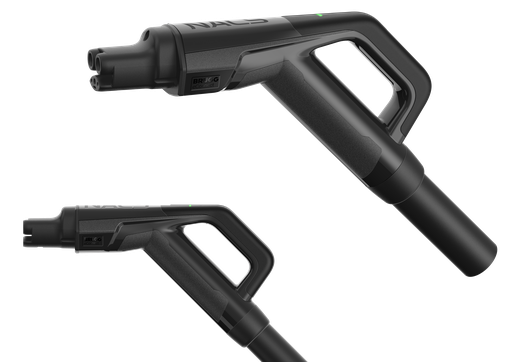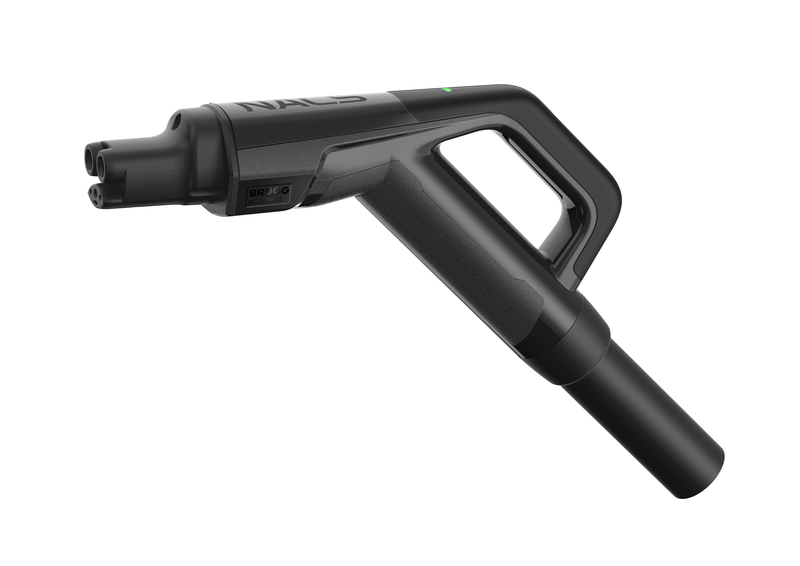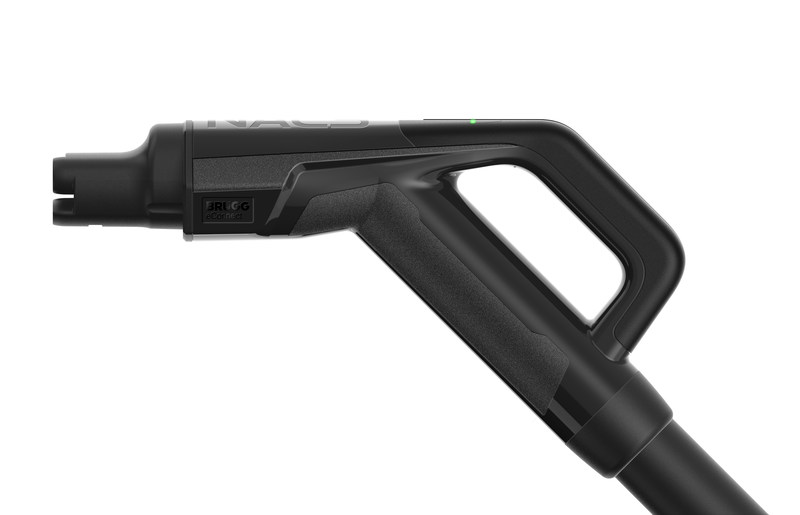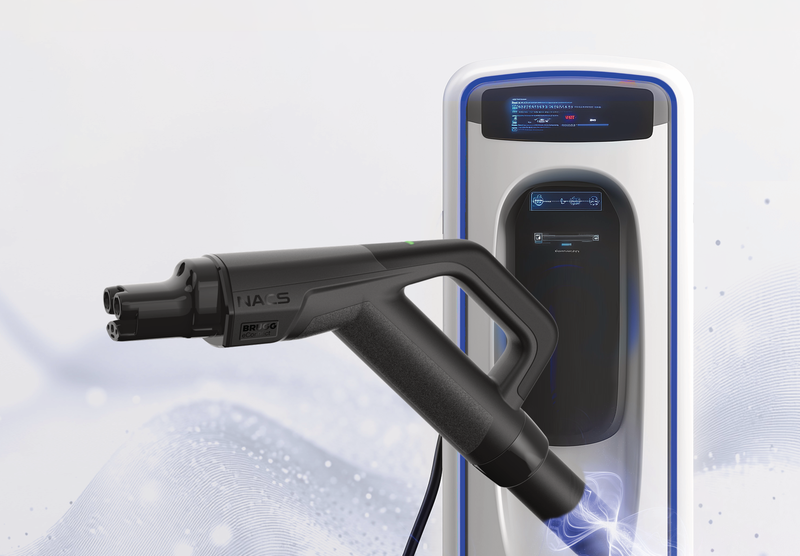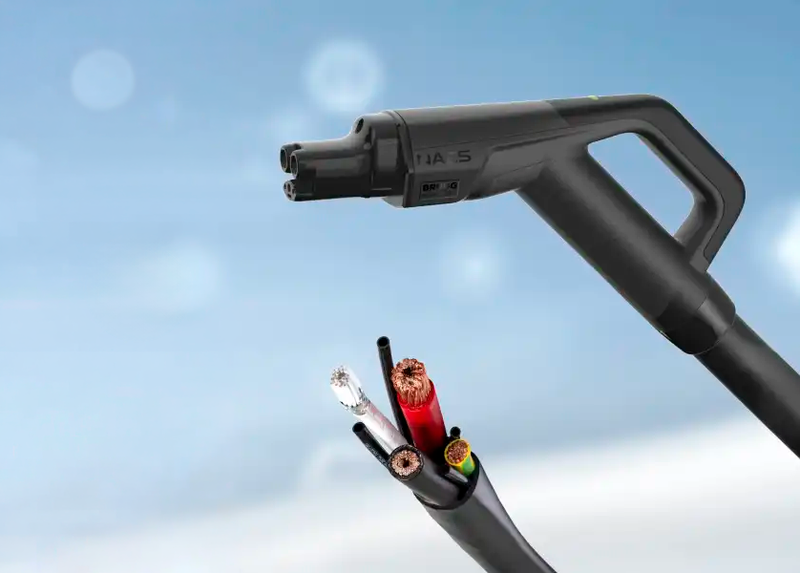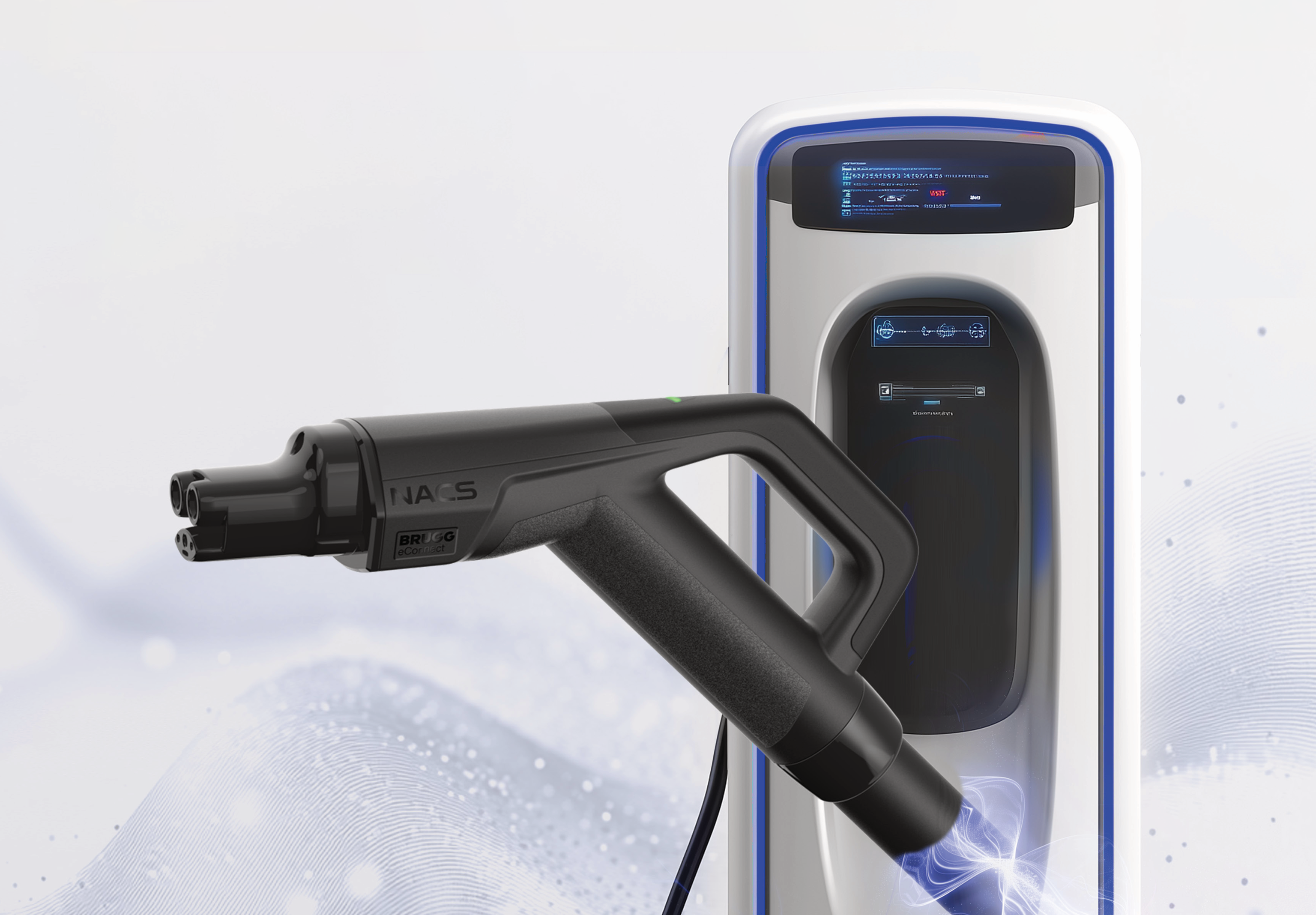

The new NACS plug is out!
After two years of development, it's now available in 300 A, 400 A, and 800 A versions.
Notably, the product features an innovative cooling system that surpasses expected charging capacity standards, alongside a sleek new design.
Successfully overcoming major challenges was crucial, including navigating strict plug size regulations affecting electrical safety spacing. Given limited design flexibility, material selection was key.
Rigorous drop tests posed additional challenges.
Through cross-department collaboration, we integrated design, engineering, prototyping, and project management, enabling the seamless transition from concept to production.
The enthusiasm for our product launch is evident, with the entire series of connectors introduced at Australia's EXA Fair. The NACS connector is now available for purchase, and the CCS connector is finalizing certification for imminent release.
As the project neared completion, drop tests posed difficulties. Simulations using the finite element method with diverse materials enhanced specifications. While early drops met expectations, final lab tests initially faltered. Differences in material preparation and fiber alignment were key. Subsequent tests with alternative materials, like a polycarbonate with a lower modulus, were conducted.
This choice proved effective, demonstrating that some elasticity aids in shock absorption, crucial for passing all tests.
This reinforces the insight: "You never stop learning!"